
Home / Lectures / Daniel Schneider, Harvard Kennedy School
The Franchise Gap: Fissuring, Job Quality, and Labor Standards Compliance
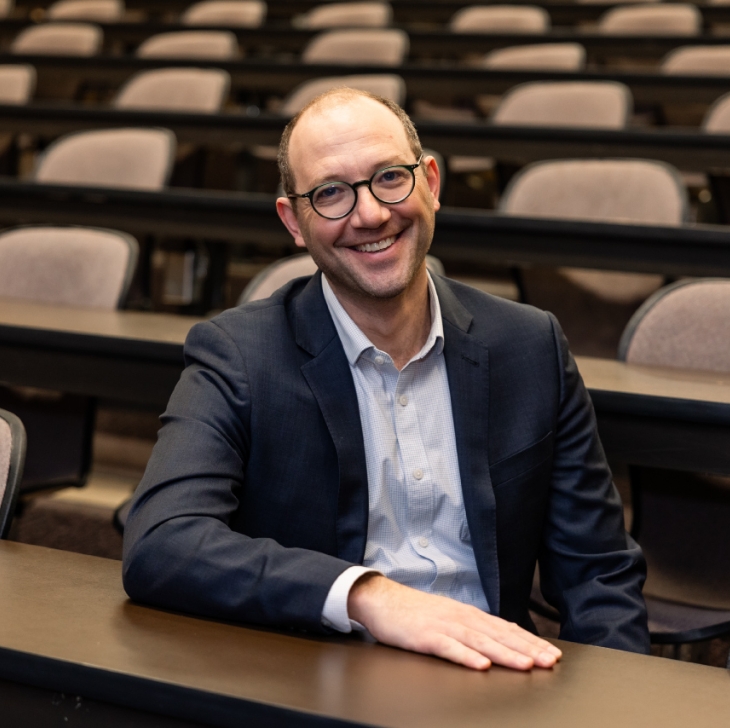
Daniel Schneider, Harvard Kennedy School
Description
Semester:
- Fall 2026
Speakers:
Lecture Time:
Fri, November 20, 2026 @ 1:30 pm to 3:00 pm
Lecture Location:
R2240, Ross building
Speaker Webpage(s):
https://dannyschneider.org/about/
Introduced By:
Sheng-Pin Huang
Abstract
Work has increasingly re-organized and fissured: the breakdown of traditional employment relations has pushed lower-income workers into lower-income firms (Weil, 2014), including through sub-contracting, outsourcing, and franchising. A growing empirical literature links such arrangements to declines in job quality along several dimensions, with studies of domestic outsourcing documenting sizable wage penalties (Dube and Kaplan 2010; Goldschmidt and Schmieder 2017) and generally elevated employment instability (Aeppli 2025). We contribute to the literature on fissuring and job quality by examining the case of franchising, which has gone relatively little examined due to limits of existing data. We take on this question by deploying two sources of novel linked data in the US context. First, we use a national individual-level sample of thousands of hourly workers employed at dozens of fast food firms surveyed between 2019 and 2025 collected by The Shift Project. These data provide both unusually detailed direct worker reports of job quality and the capacity to link responses at the firm level to organizational attributes. We make use of this capacity for linkage by leveraging a second source of novel data, legally required annual Franchise Disclosure Documents (FDDs), which report, by state and year, the number of company-owned and franchised outlets as well as detailed contractual provisions that aim to standardize production. We scraped state-firm-year level counts of franchised and company-owned establishments for major fast-food chains for the years 2019 to 2024. We show that workers in franchised fast-food restaurants make, on average, $1.7\hr less than workers in non-franchised fast-food restaurants, and have, on average, a 40-50 p.p. lower rate of access to paid sick leave and a stable schedule. In an overall job quality index, including dimensions such as wages, quality of hours worked, scheduling, fringe benefits, and work-life balance, franchisee companies have, on average, a score that is 3/4 of a standard deviation lower than that of non-franchise companies. Using the staggered implementation of Paid Sick Leave policies across 11 states, we show that these policies reduced the gap in access to PSL by 26 percentage points. Despite the substantial effect of the law’s introduction in reducing the gap, we also document rampant non-compliance with these laws: over 60% of workers in PSL jurisdictions in franchised establishments have their right to paid sick leave violated.
Recording & Additional Notes
No recordings available.
Daniel Schneider is the Malcolm Wiener Professor of Social Policy at the Harvard Kennedy School and Professor of Sociology in FAS at Harvard University. He is co-director of The Shift Project.
His research is at the intersection of inequality, labor, social demography, and social policy. His current work examines the causes, contours, and consequences of precarious working conditions and leverages novel survey data and stakeholder partnerships to understand how labor standards and high-road company practices can improve working conditions, economic security, and the well-being of workers and their families.
As co-director of the Shift Project, Schneider has co-led survey data collection from over 250,000 hourly service-sector workers to construct employer-employee linked datasets with measures of working conditions, economic security, health, and wellbeing. His research has documented patterns of precarious work in the service sector and within- and between-firm segregation in workplace inequality. He has also analyzed the consequences of employment instability for workers and families.
Schneider’s research also examines class inequality in parenting, the relationship between economic resources and marriage, divorce, and fertility, the effects of the Great Recession, and household financial fragility.
He is the author of more than 60 peer-reviewed papers, which have appeared in leading social science journals, including the American Sociological Review, the American Journal of Sociology, Demography, the American Journal of Public Health, Health Affairs, Social Service Review, and the Proceedings of the National Academy of Sciences. His work is regularly covered in the national press, including in the New York Times, the Washington Post, the Wall Street Journal, and other outlets.
He is the 2022 recipient of the Population Association of America’s Early Achievement Award and was a William T. Grant Foundation Faculty Scholar from 2018–2023. His research has received multiple best paper awards and has been supported by grants from the National Institutes of Health and the National Science Foundation, as well as private foundations including the Robert Wood Johnson Foundation, the Gates Foundation, and the Annie E. Casey Foundation.
He received his AB from Brown University in Public Policy and his PhD from Princeton University in Sociology and Social Policy. He was a Robert Wood Johnson Foundation Postdoctoral Scholar in Health Policy Research at UC Berkeley/UCSF and previously served on the faculty in the Department of Sociology at UC Berkeley.