
Home / Lectures / Mabel Abraham, Columbia Business School
Who Gets Connected? Network Drivers of Racial Inequality in Tie Formation at Work
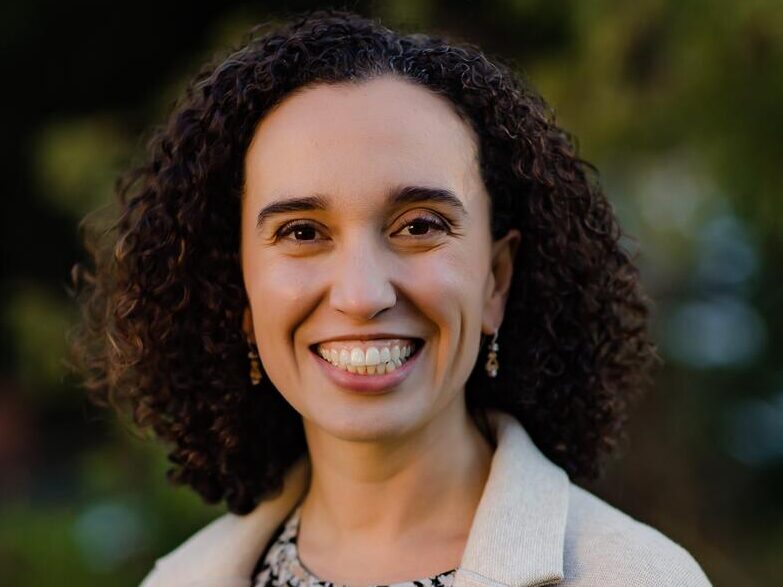
Mabel Abraham, Columbia Business School
Description
Semester:
- Fall 2026
Speakers:
Lecture Time:
Fri, November 13, 2026 @ 1:30 pm to 3:00 pm
Lecture Location:
R2240, Ross building
Speaker Webpage(s):
https://mabelabraham.com/about
Introduced By:
Yen-Kai Huang
Abstract
Intraorganizational networks are critical for careers, yet Black employees derive fewer benefits from networks than their White counterparts, partly because they form fewer cross-race instrumental ties. Extant research has attributed these disparities to interpersonal mechanisms whereby dissimilar individuals are less likely to connect. This paper moves beyond dyadic explanations by theorizing how triadic closure—whereby shared contacts increase the likelihood of tie formation—varies by race. We argue that the presence of shared contacts creates the opportunity structure for racial disparities in ties formed by reducing transparency and diffusing accountability, particularly when those ties provide access to career-advancing work. Using a longitudinal network dataset combining personnel and staffing records of 2,481 new hires in a professional services firm, we estimate the causal effect of having shared contacts on subsequent year-end tie formation. We find that the effect of shared contacts on subsequent tie formation is approximately 94% lower for Black than for White new hires, although no such gap exists when ties form in the absence of shared contacts. These findings advance our understanding of the network drivers of racial disparities, demonstrate that triadic closure is socially differentiated, and show how networks generate unequal access to career-advancing opportunities.
Recording & Additional Notes
No recordings available.
Mabel Abraham is the Barbara and Meyer Feldberg Associate Professor of Business at Columbia Business School and a faculty affiliate of the Sanford C. Bernstein & Co. Center for Leadership and Ethics. She is also the Co-Director of the Equity by Design Lab, which provides developmental support to junior scholars studying organizational drivers of inequality, and serves on the Academic Advisory Council for ERA Project at NYU Law’s Birnbaum Women’s Leadership Center, a law and policy think tank focused on advancing gender equity.
In her research, she studies inequality in organizations, asking not only when disparities persist but also when they are overcome. She examines routine business practices—such as referral programs and peer review systems—to show how they shape both evaluations and the pursuit of career opportunities. Much of her work focuses on gender, though she is increasingly examining other dimensions of inequality. She favors field data and design studies to address core critiques of inequality research—for example, by using natural and field experiments and careful identification strategies to account for unobserved quality differences. She pairs these approaches with a contextual understanding of her field sites, as this multi-method perspective allows me to capture the boundary conditions under which inequality is most and least likely to persist.
Professor Abraham is published in top peer-reviewed journals, including Academy of Management Journal, Administrative Science Quarterly, American Sociological Review, Organization Science, Psychological Science, and Research in Organizational Behavior, and has been recognized with numerous prestigious awards and grants, including from The Kauffman Foundation and The Russell Sage Foundation. Most recently, her work was recognized with the 2026 ASQ Award for Scholarly Contribution. Insights from my research have also been featured in leading media outlets, including the Harvard Business Review and Wall Street Journal. Recognizing my impact, Thinkers50 named me to its 2025 Radar Class, which highlights scholars shaping the future of management.
At Columbia, she redesigned the MBA Power and Influence course, which is a popular elective among students. She regularly teaches executive courses on power, influence, and networks, as well as PhD seminars on organizational theory.
Professor Abraham received her PhD and SM from the Massachusetts Institute of Technology, Sloan School of Management and her BA in Mathematics from Providence College. Prior to entering the PhD program she worked in the finance industry—as an actuary, risk analyst, and project manager.
She lives in NYC with her husband Joe and their two children.